Punch List to Key Delivery: What Steps 20-21 Actually Cover, and What to Expect in Your First Year
The last two weeks of a custom build don't look like the first ten months. The framing crews are gone. The drywall dust has been swept out. What's left is a punch list, a final walkthrough, and a set of keys — and then, for the family moving in, a whole new phase that no build schedule accounts for: living in the house. Here's how steps 20 and 21 of the Atlas process actually work, and what the first year in a truly custom home should look like.
Step 20: What the Punch List Really Catches
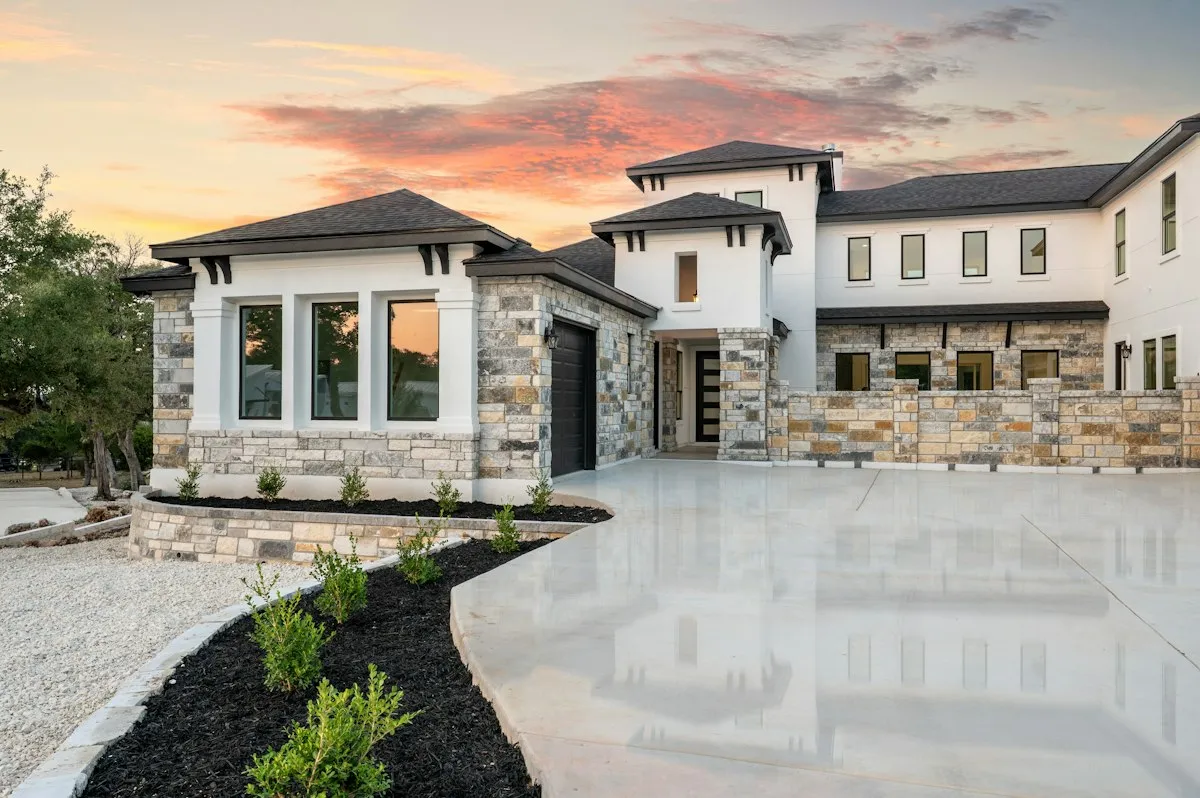
By the time a home reaches the punch list, the major systems are done — framing, MEP, insulation, drywall, and both interior and exterior finishes are complete. The punch list isn't a search for big problems; it's a line-by-line pass to catch the small things that get missed at this scale of detail: a paint touch-up in a corner, a cabinet door that needs realignment, a tile grout line that isn't quite even, hardware that's slightly off-level. On a home with the finish complexity Atlas builds — custom millwork, book-matched stone, steel-framed windows — the punch list can run longer than on a production home, and that's by design. It means someone is actually looking.
What matters most at this step isn't the length of the list. It's who's accountable for closing it. With a single point of contact managing your project from groundbreaking through key delivery, the punch list doesn't get handed off to a subcontractor's answering service — your project manager owns it, walks it with you, and confirms every item is resolved before step 21 begins.
Step 21: The Final Walkthrough and Key Delivery
The final walkthrough is not a formality. It's the moment you confirm, room by room, that the home matches what was designed, selected, and priced back at steps 06 and 07 — no surprises, no last-minute change orders, no "we'll fix that later." For a family who's been reviewing finish selections and framing photos for the better part of a year, this is the first time the house reads as a finished home instead of a construction site.
Bring the same attention here that you brought to material selections. Test every door and window. Run the water in every fixture. Walk the outdoor spaces at the time of day you'll actually use them. Then, when the list is clear, you get the keys — from your bare plot of land in Bee Cave, Westlake, Lakeway, Dripping Springs, or the Horseshoe Bay corridor to a home built specifically around how you live.
The First 90 Days: What to Actually Expect
Moving into a newly built custom home is different from moving into a resale. Materials are still settling. Wood trim and cabinetry will respond to Central Texas humidity swings between summer and the first cold front. Small nail pops or hairline drywall cracks at seams can show up as the house acclimates — this is normal in any new build, not a sign something was done wrong. Keep a simple running list as you settle in: anything you notice in the first few months, note the room and the issue, and bring it to your builder in one conversation rather than a dozen texts.
This is also the point where the systems you spent time selecting — HVAC zoning, low-voltage wiring, lighting scenes — get tested against real daily life instead of a plan set. A concierge build process doesn't end at key delivery; a builder who stayed a single point of contact through steps 01 through 21 should still be the first call if something needs attention in year one.
Built to Stand the Test of Time
The real test of a custom home isn't the final walkthrough — it's how it holds up five, ten, twenty years out. That's a function of decisions made long before the punch list: the foundation work at step 13, the envelope choices at steps 16 and 17, the exterior materials selected at step 19 for Central Texas sun and weather. A home that's truly custom, built without templates and without cut corners, is a home that ages the way it was designed to — which is the whole point of building instead of buying a resale that already locks you into someone else's compromises.
Every Atlas home is named for the street, the land, and the life it was built for. Step 21 is where that name starts to mean something — not as a project on a schedule, but as the place a family actually lives.
Thinking about what's next after your own groundbreaking, or ready to start the process? Schedule a consultation with Atlas to talk through your lot, your timeline, and what a truly custom build looks like from your first meeting to your final walkthrough.