
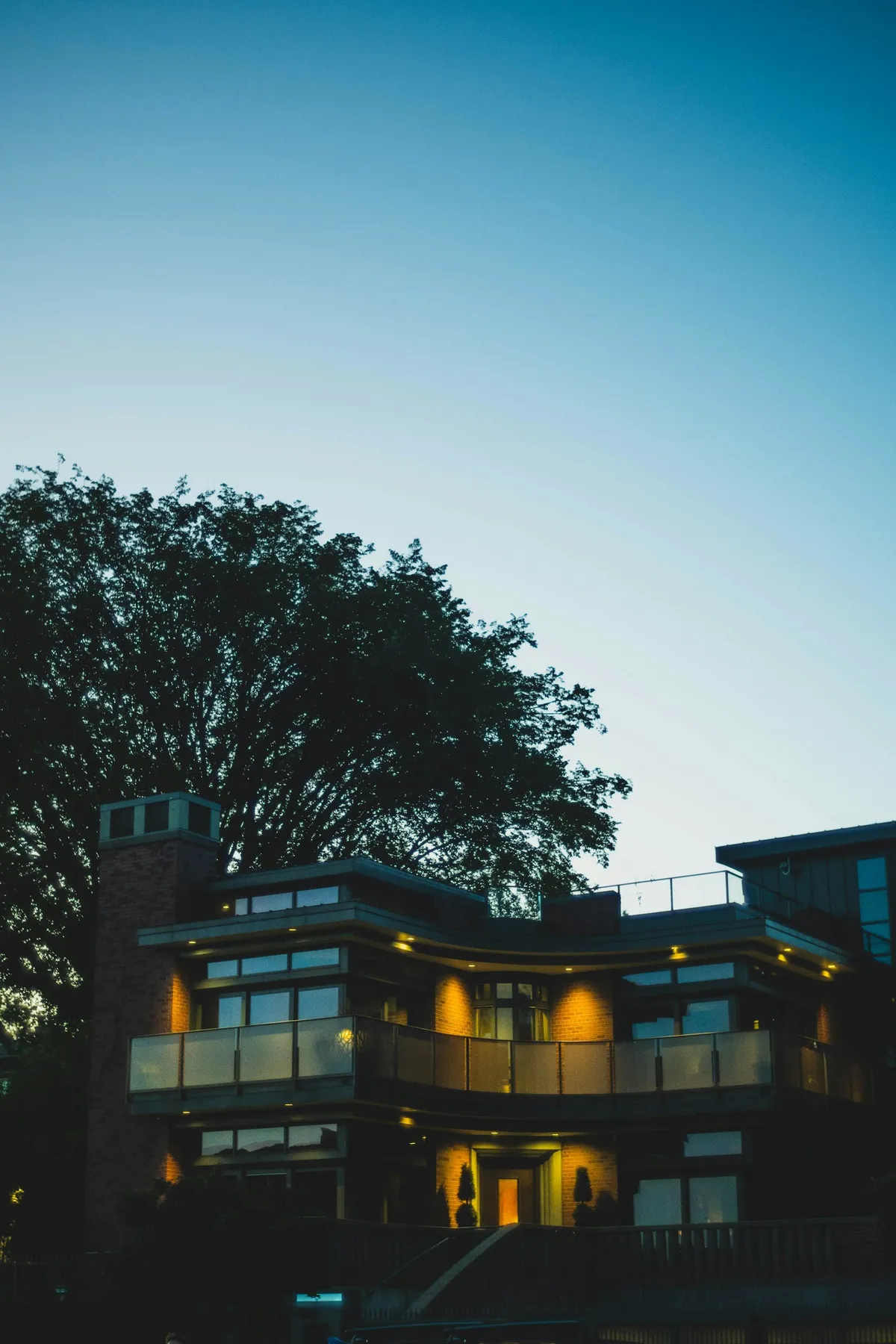
Smart Home or Simple Home? How Much Automation Actually Makes Sense in a $2M-$12M Central Texas Build
Every custom home client asks some version of the same question partway through design: how smart should this house actually be? The honest answer, after building across Bee Cave, Westlake, Lakeway, Dripping Springs, and the lake corridor, is that the question itself is slightly wrong. The real decision isn't "smart vs. simple." It's which systems deserve automation, which deserve nothing more than a good switch, and when each of those decisions has to be locked so it doesn't cost you a change order six months into framing.
On a $2M-$12M build, the temptation is to say yes to everything at the design table. A full home automation platform, scene-based lighting in every room, motorized shades on every window, a server closet that looks like a small data center. Some of that earns its keep for decades. Some of it becomes the first thing a homeowner rips out five years in because nobody could remember which app controlled what. The job of a builder who's run this process dozens of times is to tell you, specifically, which is which — before the walls close.
What Actually Earns Its Place
A few categories consistently pay for themselves in a Central Texas home, and we treat them as close to default:
- Climate zoning. A single-story 6,000-square-foot home with one thermostat is fighting Texas heat with one hand tied behind its back. Zoned HVAC, tied to a simple control schedule, is one of the highest-value upgrades in the house and barely shows up as a line item relative to the mechanical system you're already installing.
- Exterior and landscape lighting on scenes. Dusk-to-dawn automation on accent lighting, soffit lighting, and pool lighting isn't a luxury flourish — it's the thing that makes a Hill Country elevation actually look like the renderings at night, every night, without anyone remembering to flip a switch.
- Access and perimeter security. Gate entry, driveway cameras, and door locks tied to one system make sense on nearly every lot we build on, whether it's a gated Westlake street or ten acres outside Dripping Springs where the nearest neighbor is a quarter mile away.
- A real structured-wiring backbone. This is the one category where "decide now, regret later" isn't a cliché — it's physics. Conduit and low-voltage wiring are cheap before drywall and brutally expensive after. Even clients who don't want a full automation platform at move-in should wire for one.
Where Automation Often Isn't Worth It
The categories that cause the most buyer's remorse are usually the ones sold hardest: whole-home voice control tied to every light switch, motorized shades in rooms used twice a year, and audio zoning in spaces where a homeowner would be just as happy with a good Bluetooth speaker. None of these are wrong choices for the right client. They're wrong choices for a client who didn't actually want to manage a platform and just wanted a beautiful, quiet house that works. We'd rather ask the blunt question at the design table — "do you want to manage this, or do you want it to disappear?" — than let a vendor's showroom answer it for you.
Why the Timing Matters More Than the Feature List
This is where sequencing inside our 21-step process does real work. Low-voltage rough-in happens at the same point in the schedule as electrical rough-in — before drywall closes the walls — which means the structured-wiring decision has to be final by then, even if the automation platform itself gets selected much later. We intentionally decouple those two decisions: wire for the possibility now, choose the actual system (or choose to skip it) closer to move-in, when you're not making it from a conceptual plan but from a house you can walk through. That order is also what keeps a $2M build from quietly becoming a $2.3M build on features nobody asked to add mid-construction.
The Simple Version of a Complicated Answer
A truly custom home should feel effortless to live in, not like a second job managing technology. For most of our Central Texas clients, that means automating the systems that fail quietly if you don't — climate, exterior lighting, security — and keeping everything else as simple, well-built, and replaceable as possible. The goal was never to build the smartest house in Westlake. It was to build the one that still works exactly the way you want it to in year fifteen, long after this year's platform is obsolete.