Ten Questions to Ask a Central Texas Builder Before You Sign a Construction Contract
By the time most families sit down to sign a construction contract, they have already toured a few builders, looked at a few portfolios, and heard a version of the same pitch: custom process, quality materials, on-time delivery. The pitch rarely tells you what you actually need to know. The contract is where a builder's promises either hold up in writing or quietly disappear.
If you are planning a custom home in Bee Cave, Westlake, Lakeway, Dripping Springs, Spicewood, or the Horseshoe Bay and Marble Falls lake corridor, the questions below are the ones worth asking before you sign anything. Some have simple answers. A few have answers that should end the conversation entirely.
1. Is this a custom design, or a plan you're adapting?
Ask to see the design process before you ask about finishes. A builder who starts from a catalog plan and swaps a few materials is running a semi-custom operation, no matter what the marketing says. A truly custom process starts with your lot and your life, not a floor plan that already exists. There is nothing wrong with semi-custom — it is a legitimate, lower-cost path for a lot of buyers. But if you are being sold "custom" and shown a plan book, ask directly whether the floor plan can change in ways that matter to you, not just the countertop color.
2. When does pricing happen relative to the design?
This is the single question that predicts more mid-build conflict than any other. If a builder prices your home before the plans and material specifications are finalized, that number is a guess dressed up as a budget. It will move — usually up — as design decisions get made. The order that protects you is design and specifications first, then a preliminary price built against a plan that's actually locked. If a builder can't explain what happens to your price when you change your mind about a window package in month four, that's your answer.
3. What's included in "custom" — every selection, or the big ones?
Ask for a walk-through of exactly which decisions you'll make and which are handled for you. Some builders leave every tile, fixture, and paint color as an open decision, which sounds appealing until it becomes decision fatigue spread across a year. Others sequence selections so you make fewer, better decisions at the right moments and can step back from the ones that don't matter to you. Neither approach is wrong, but you should know which one you're signing up for before groundbreaking, not during it.
4. Who is my actual point of contact once the contract is signed?
A sales conversation with a principal or a design lead can feel very different from six months into construction, when your calls route to a rotating cast of superintendents and subcontractors. Ask, by name, who owns your project from groundbreaking to final walkthrough. A concierge, single-point-of-contact model means one person is accountable for your schedule, your budget, and your questions — not a phone tree.
5. What is a realistic timeline, and what blows it up?
In Central Texas, a well-run custom build should take roughly twelve months or less from groundbreaking to completion. Ask what happens on this specific builder's projects when that timeline slips — permitting delays, material lead times, weather, change orders. A builder who can name the two or three things that actually move a schedule, and how they plan around them, has done this enough times to be honest with you. A builder who promises a date with no caveats hasn't.
6. How do you evaluate a lot before we buy it?
If you haven't closed on land yet, this question should come before the design conversation, not after. Slope, tree cover, utility access, septic versus sewer, and HOA architectural review requirements all affect what you can build and what it costs to build it. A builder who will walk a lot with you before you make an offer — and tell you honestly when a site has hidden costs — is protecting your budget before it's even at risk.
7. What does the contract say about change orders?
Every custom build has changes. The question is whether the process for pricing and approving them is written down or handled by handshake. Ask to see how a change order is documented, priced, and signed off, and how it affects the schedule. Vague change-order language is where budgets quietly grow by six figures over the course of a build.
8. Can I see homes you've actually built — not renderings?
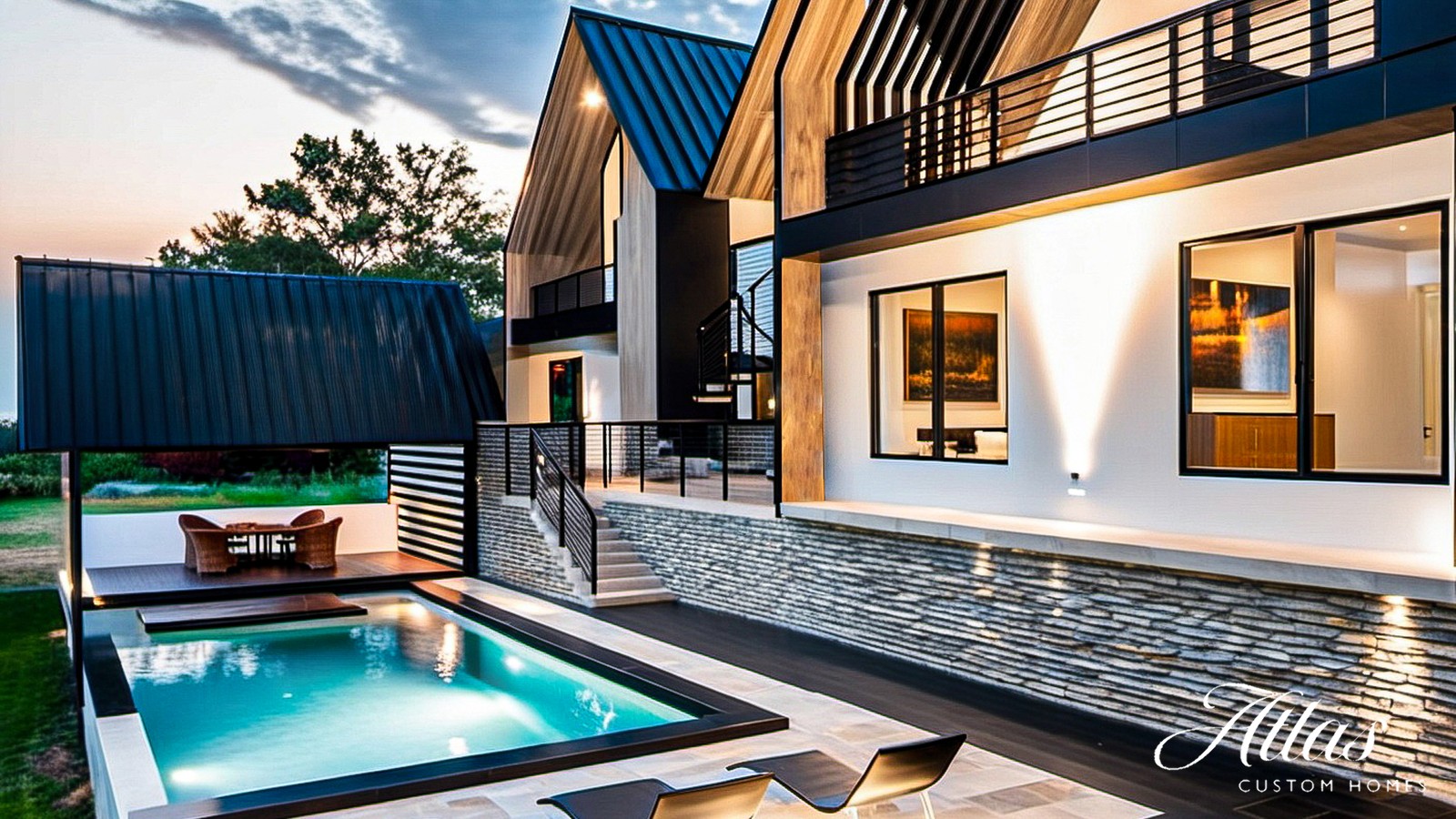
Renderings sell dreams. Completed homes tell you what a builder actually delivers. Ask to see finished projects, ideally ones similar in scope to what you're planning, and ask about the story behind them — the lot, the family, the design problem it solved. A builder who can talk specifically about a handful of real projects, by name, has a track record. A builder who can only show you stock photography does not.
9. What's genuinely not included in the $2M–$12M range you're quoting?
Custom home budgets in this market span a wide range for good reason — lot, design complexity, materials, and finish level all move the number. Rather than asking for a per-square-foot figure (which is close to meaningless on a truly custom home), ask what's excluded from the number you're being quoted: landscaping, pool, furnishings, land development costs. A transparent builder will tell you plainly, aligned to your budget from day one, with no surprises buried for later.
10. What happens after the final walkthrough?
Punch list, final walkthrough, and key delivery aren't the end of the relationship — they're the start of living in the house. Ask how warranty items are handled, who you call if something needs attention in year one, and whether that's the same point of contact you had during construction. A builder who treats key delivery as the finish line, rather than a milestone, is telling you something about how they'll handle a phone call eight months from now.
The answers that should end the conversation
A few answers are disqualifying on their own: pricing locked before design is finished, no clear point of contact once you sign, vague or undocumented change-order language, and an unwillingness to show you real, named projects. None of these are matters of taste. They are structural risks to your schedule and your budget, and they tend to compound over a twelve-month build rather than resolve themselves.
The families who end up happiest with a custom home aren't the ones who asked the fewest questions before signing — they're the ones who asked the most specific ones, and got specific answers back.
If you're evaluating builders for a custom home anywhere from Bee Cave to Horseshoe Bay, we'd welcome the comparison. Learn more about the Atlas process and start a conversation about your project.