
The Long-Lead List: Why Windows, Stone, and Custom Millwork Have to Be Ordered Before Step 18 Even Starts
Most delays in a custom build don't happen on site. They happen three months earlier, in a shop or a mill or a port, when something nobody thought to order yet still hasn't shipped. By the time framing wraps and Step 18, Interior Finishes, is ready to start, the homes that stay on schedule are the ones where procurement was already weeks ahead of the crew — not scrambling to catch up with it.
Why "long-lead" items set the real schedule
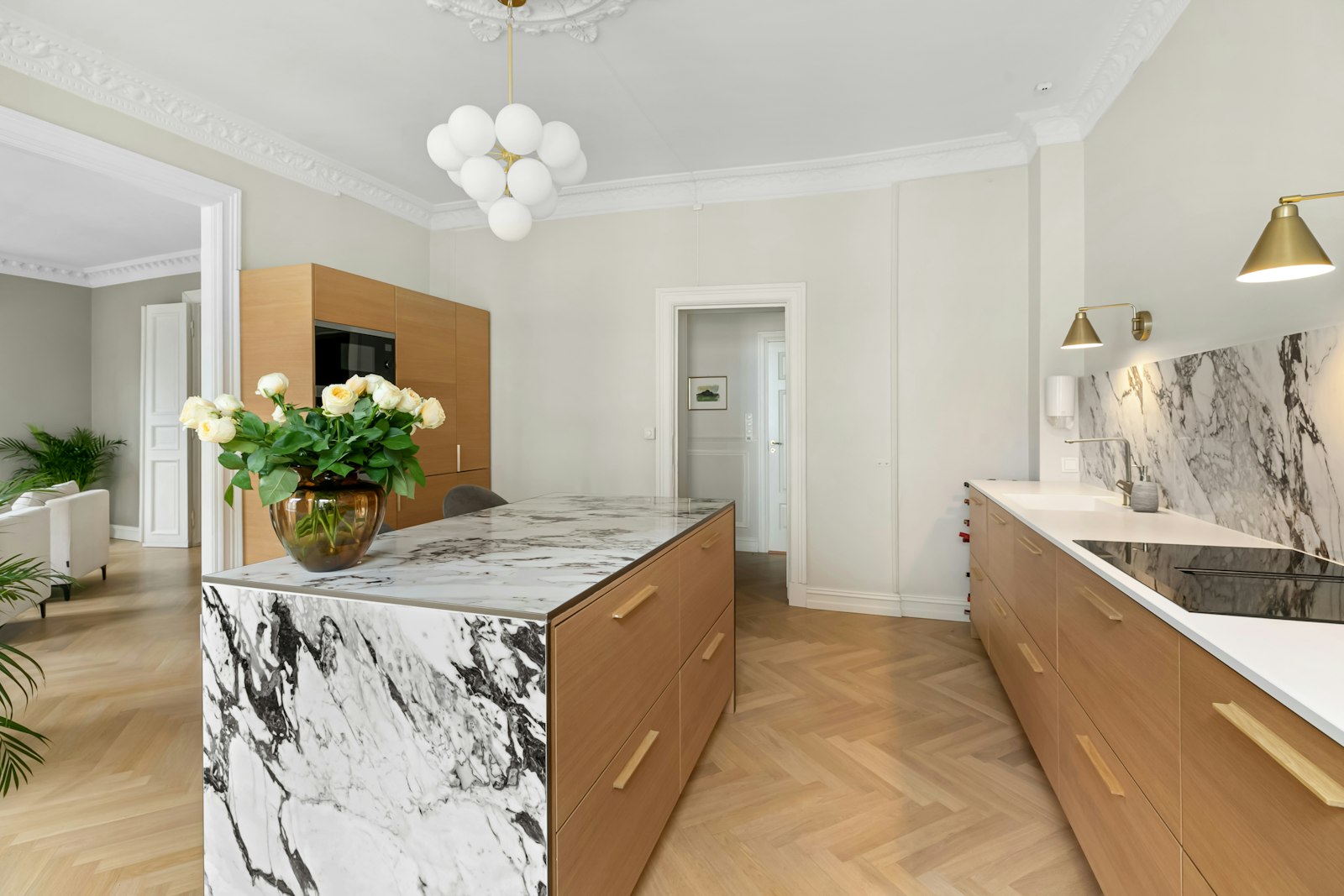
Windows, custom millwork, imported stone, and specialty appliances don't behave like drywall or paint. They have to be designed, fabricated, and often shipped from outside Central Texas — sometimes outside the country — before a single piece reaches the site. A book-matched marble slab for a kitchen island, a custom steel-framed window package, or a built-to-spec range can carry lead times of 12 to 20 weeks from the day it's ordered, not the day it's selected.
That gap is the hidden clock on every custom home. A homeowner can finalize a material choice in an afternoon. Getting that choice into the house on schedule is a procurement problem, not a selections problem, and it has to be solved months before Step 18 ever starts.
Sequencing procurement behind the build, not the schedule
The discipline that protects a 12-month timeline is ordering long-lead items against the construction schedule, not against the calendar date when a client happens to make a decision. Windows get released for fabrication once the framing plan is locked, well before Step 14 begins, because the rough openings have to be exact and the glass package has to be on a truck by the time the walls are ready for it. Stone, cabinetry, and custom millwork follow the same logic: design development and material selections at Step 09 aren't just about taste, they're the trigger that starts the fabrication clock on everything that can't be bought off a shelf.
Done well, this sequencing is invisible. The homeowner sees finishes arrive exactly when the house is ready for them. Done poorly, it's the opposite of invisible — it's a framed, drywalled home sitting empty for six weeks because a window order went in late, or a kitchen that can't be finished because the island slab is still on a boat.
Why this is where single-point-of-contact builders earn their value
This is also where the difference between a truly custom build and a production or semi-custom process shows up most clearly. Production builders work from a catalog of pre-approved materials with fabricators already on standing order — there's no long-lead risk because there's no custom selection. Truly custom means every stone, every window profile, and every piece of millwork is a one-off decision, which means every one of them has its own lead time to track.
Managing that without a single point of contact means a homeowner is effectively running their own procurement office — tracking a dozen vendors, confirming a dozen ship dates, and discovering a problem only when a truck doesn't show up. A concierge build means one person is watching that whole board on the client's behalf, flagging a slow vendor in month three instead of discovering the gap in month nine when the crew is standing in a finished shell with nothing to install.
What this means for your decision timeline
For a homeowner building $2M to $12M, this is the practical argument for making material and finish decisions earlier than it feels necessary. A kitchen layout can wait. A window package, a stone selection, or a custom cabinetry order generally can't — not without pushing the completion date. The lot you're evaluating, the architect's conceptual plan, and the material selections you'll make at Step 09 are all connected to the same procurement clock, and the earlier that clock starts, the more real flexibility you keep later, when it matters more.
This is also why "12 months or less" is achievable on a truly custom home without cutting corners on design: it isn't a shortcut on selections, it's discipline on sequencing. The homes that hit their completion date are the ones where the procurement plan was built alongside the construction schedule from the start, not assembled after the fact.
Building toward your move-in date, not around it
A custom home built around your land and your life shouldn't cost you certainty about when you'll actually move in. The long-lead list is one of the clearest examples of why a concierge, single-point-of-contact process exists in the first place — so the decisions you make on your schedule don't quietly become the delays you discover on someone else's.
If you're evaluating a lot in Bee Cave, Westlake, Lakeway, Dripping Springs, Spicewood, or the Horseshoe Bay – Marble Falls corridor and want to understand how a realistic timeline actually gets protected from the first consultation forward, schedule a consultation with Atlas Custom Homes.